
By Mai Bui, Co-founder & CEO, Quarter20
IMTS 2026 is a wrap. It was an action-packed week with a lot of steps. For everyone who couldn't make it to Chicago, here's my take.
1. Not much has changed, the machines just got bigger.
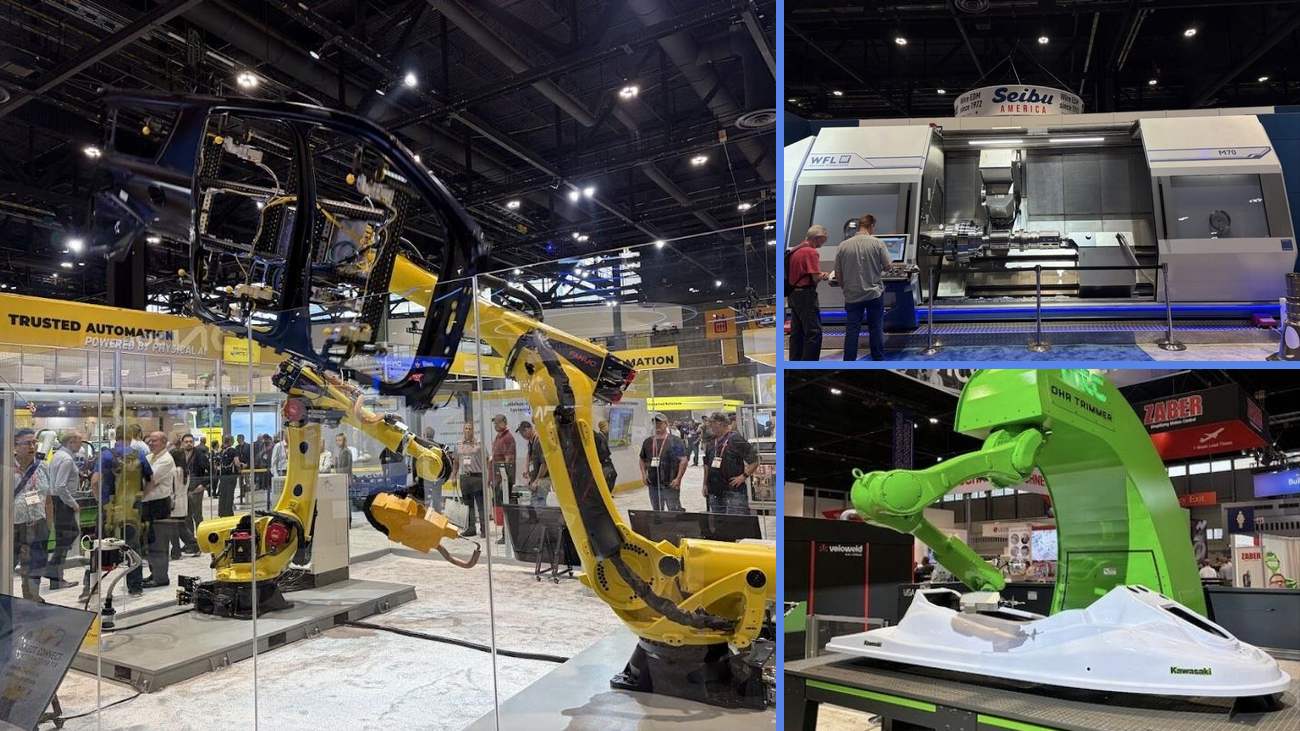
That's… mostly it. Yes, cobots can lift cars. Yes, you can buy a CNC the size of a house. But booths are still showing off 5-axis like it's new (it's been around for 60 years). The capabilities and levels of precision are largely the same.
It's possible we've reached a plateau when it comes to manufacturing capabilities. If that's true, the next decade isn't about the hardware. It's about the software and integration layer that sits on top of it.
2. Cobots do the work and humanoids do the marketing.
Two years ago, there were a lot of cobots. There are still a lot of cobots. Out of the thousands of booths I saw, I maybe saw 2 humanoids and none of them were doing anything (and this includes the Boston Dynamics booth).
LinkedIn, Twitter, and the Robotics Olympics in China can hype them all they want, but on the manufacturing floor, cobots are doing the real work.
On that note, most of the arms I saw on the floor were Fanuc. Very little ABB and Kuka presence this year.
3. AI hasn't landed in manufacturing (yet)
Almost no booths led with AI. The conversation is still about automation. Either AI isn't moving the needle here like it is everywhere else, or manufacturers just aren't buying the buzzwords (I suspect it's some of both).
4. Made in America is having a moment.
Plenty of Chinese manufacturers still, but a growing wave of proud US shops. Didn't see any of these manufacturers promoting any special or flashy capabilities, but it does indicate a growing marketplace for an onshored supply chain. Not a surprise considering recent tariff policies and the growing defense tech and aerospace industries.
5. SpaceX showed up for the first time
As a SpaceX alum, I know how hard they've always pushed the additive industry, changing the landscape for aerospace manufacturing. Is this a sign they're becoming manufacturing-first? I did notice additive manufacturing getting a more prominent spot this year.
My Takeaway
On LinkedIn and Twitter, manufacturing is all about humanoids, AI, and robots doing backflips. On the floor at IMTS, I saw Fanuc arms, 5-axis mills, and cobots quietly doing the same jobs they did two years ago.
The hype cycle and the shop floor have never been further apart. What does this mean?
It means the people building the future of manufacturing and the people actually manufacturing things are looking at two different problems.
The internet thinks the bottleneck is capability, but I disagree. The bottleneck is everything around the machine – the harder but less "interesting" problems: ECOs that don't make it to the floor, hiring and training in a shrinking labor pool, supply chain whiplash. These aren't robotics problems, they're information problems.
Cobots are everywhere because they went after one of these headaches. They didn't promise a smarter machine, they filled a labor gap without requiring a multi-year integration.
So the takeaway from IMTS isn't that manufacturing is behind, it's that manufacturing has a very high bar for what "works," and the next wave of tools will have to clear it the same way cobots did: by showing up on the floor and doing a job.
Were you there? Do you disagree? What did I miss?
.png)
.png)
.jpg)
